
Indica vs Sativa vs Hybrid: What They Mean
Cannabis 101 · Strain Categories
Indica, sativa, and hybrid are terms that describe a cannabis plant's lineage (its genetic family), not a guarantee of how a particular product will make you feel. The popular idea that each category reliably produces a fixed experience is an oversimplification, and one that every ranking source in this topic reinforces. This guide explains what indica vs sativa vs hybrid actually refers to, what the label can tell you, what it cannot, and how to use that information when you shop.
No effects promises, no shortcuts. Just a straight answer on what the categories mean.
What indica, sativa, and hybrid actually describe
Indica, sativa, and hybrid are classification labels that describe a cannabis plant's genetic lineage and growth characteristics, not a fixed formula for its effects. Historically, the terms referred to distinct plant families with different morphology: indica plants were shorter and broader-leafed; sativa plants were taller with narrower leaves. Growers used those physical traits to distinguish cultivars in the field.
The problem is that the labels were never designed to predict a specific experience. They described the plant's genetics and how it grew, not what the cannabinoid or terpene content would be. Modern cultivation has blurred the lines further through decades of crossbreeding, so the category names now function mostly as shelf categories rather than precise genetic descriptions.
Most people reach for these labels hoping to know how a product will affect them. That instinct makes sense. But the category alone is a rough signal, not a spec sheet. The rest of this guide explains what actually fills in the gaps.
What is indica?
Indica refers to a cannabis lineage traditionally associated with shorter, broad-leaved plants, a description of the plant's genetics and growth habit, not a promise about how a product will feel. The indica plant family was historically grown in particular mountainous climates, and those environmental conditions shaped the morphology: compact plants, dense structure, broader leaf shape.
On a dispensary menu, products labeled "indica" or "indica-dominant" are telling you about the genetic family they belong to. That is useful context when you are comparing products. What it does not tell you is the THC or CBD content, the terpene profile, or how a specific product will affect a specific person. Two products both labeled indica can differ substantially because those underlying variables differ. The label is a starting category, not a guarantee.
What is sativa?
Sativa refers to a cannabis lineage traditionally associated with taller, narrow-leaved plants, again a description of genetics and growth habit, not a guarantee of a specific effect. Sativa plants were historically grown in warmer equatorial climates, which produced a taller plant with a different leaf structure than its indica counterpart.
A product labeled "sativa" or "sativa-dominant" on a menu is pointing you toward a genetic family, the same way the indica label does. The parallel structure here is intentional: both labels describe lineage. Neither describes what the product contains. What actually determines a product's character is the cannabinoid content, the terpene profile, the dose, and how your body responds to those things. The category is a filing system, not a prediction.
What is a hybrid? (and why most products are hybrids now)
A hybrid is a cannabis plant bred from a cross of indica and sativa lineage, and today the vast majority of products on dispensary shelves are hybrids. That is not a recent development. Decades of cultivation and crossbreeding have mixed the genetic lines to the point where pure indica or pure sativa is increasingly rare. Most of what you see on a menu has some blend of both.
Hybrids are further described as indica-dominant, sativa-dominant, or balanced, depending on which genetic lineage is more prominent in the cross. Those sub-labels describe the lineage ratio, not an effects ratio.
The consumer-relevant takeaway is that because almost everything is a hybrid, the indica/sativa label on its own tells you even less than people tend to assume. If the category distinction was already imprecise, a market dominated by genetic crosses makes it more so. This is exactly why the next section matters.
Why the indica/sativa label only tells you part of the story
The indica or sativa label only tells you part of the story because the things that most shape a cannabis product, its THC and CBD content, its terpene profile, the dose, and your own body, are not captured by the category name.
Most people checking the category label are really asking: how will this affect me? The honest answer is that the label cannot tell you. Here is what can.
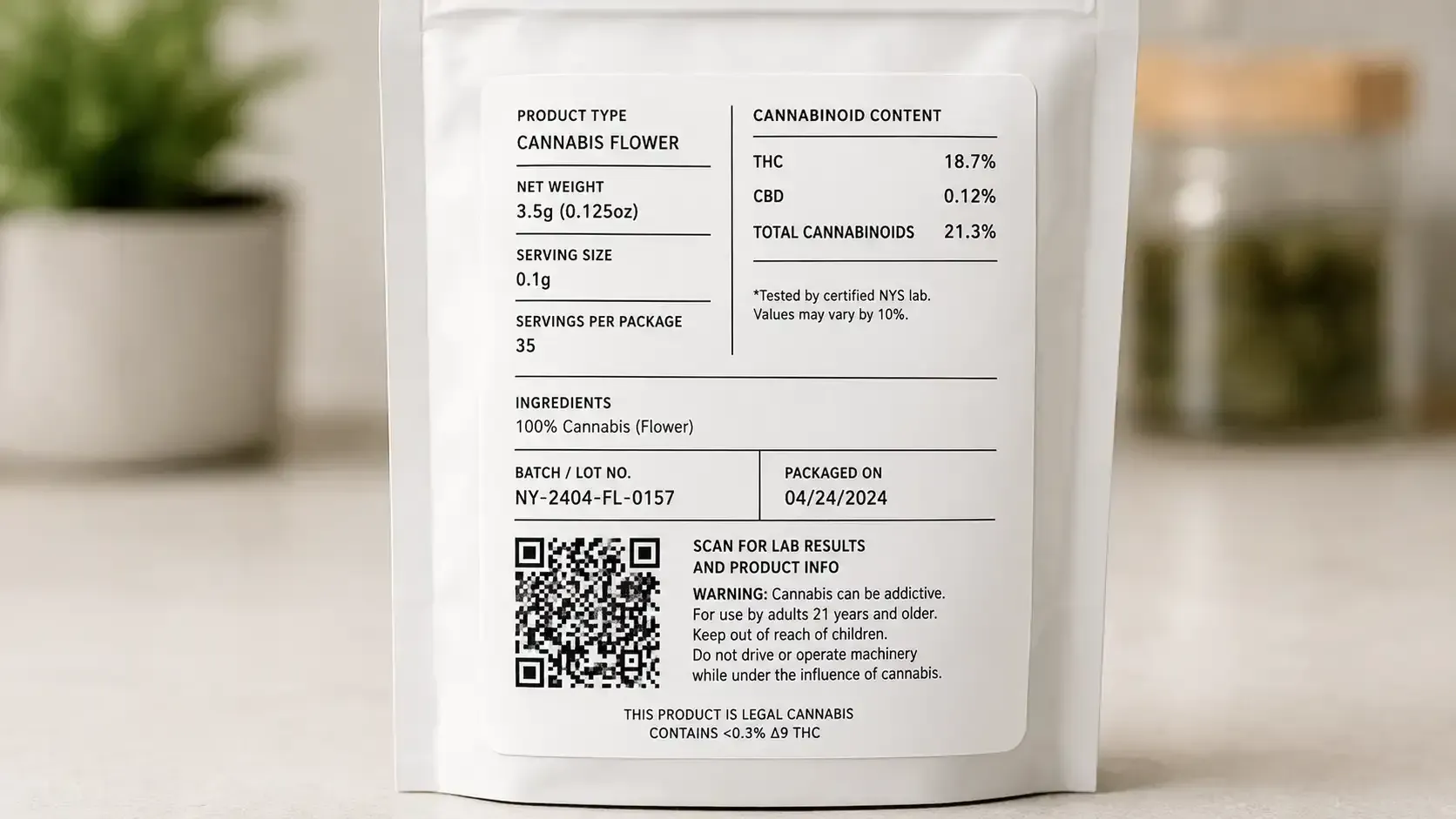
THC and CBD content. THC is the compound most associated with feeling high. CBD is non-intoxicating. The percentages on the label tell you how much of each compound is in the product, and they are printed on every product sold at a licensed New York dispensary, a more useful signal than the category word.
Terpene profile. Terpenes are aromatic compounds found in cannabis that vary from product to product. Common examples include myrcene, limonene, pinene, and linalool. The terpene list, when it is printed on the label, gives you another point of comparison between products.
Dose. How much you take matters. A smaller amount of a given product is a different experience than a larger one, regardless of the category label on the package.
The individual. Two people can use the same product at the same dose and have a different experience. Body weight, metabolism, and tolerance all play a role.
Anyone telling you "this category always does X" is overselling what the label can deliver. Start with the cannabinoid numbers, compare terpene lists between products, and ask a budtender about anything you are unsure of.
The straight answer
The indica/sativa label describes lineage. THC %, CBD %, terpenes, dose, and the person are what actually vary between products. The category is a starting point, not a prediction.
How to use these labels when you shop
To use these labels when you shop, think of the category as a starting point, check the THC and CBD percentages for strength, scan the terpene list to compare products, and ask a budtender about anything you are unsure of. That is the practical sequence.
Step one: note the category. Indica, sativa, or hybrid gives you a rough shelf orientation. It is useful context, not a decision on its own.
Step two: look at the cannabinoid percentages. The THC number tells you potency. The CBD number tells you the ratio of non-intoxicating to intoxicating compound. Strength tracks those numbers, not the category word.
Step three: check the terpene list if it is printed. Terpenes help you compare the aromatic and compositional character of products side by side. They are a real differentiator between products that might otherwise look the same on the shelf.
Then bring your questions to a budtender. Staff can walk you through what is on the menu, help you compare specific products, and point you toward something that fits what you are looking for, without pushing you toward whatever is overstocked. That conversation is more useful than any category label. When you are ready to look at real, labeled products, browse the New York menu and bring your questions in.
Indica, sativa, and hybrid at a glance
Here is what indica, sativa, and hybrid each refer to at a glance, and what the label leaves out.
Read the columns left to right: lineage is what the plant is, signal is what the label tells you, and the final column is what it cannot tell you on its own.
| Category | Plant lineage / typical morphology | What the label signals | What the label does NOT tell you |
|---|---|---|---|
| Indica | Lineage historically tied to shorter, broad-leaved plants | A genetic family / shelf category | How a specific product will make you feel |
| Sativa | Lineage historically tied to taller, narrow-leaved plants | A genetic family / shelf category | How a specific product will make you feel |
| Hybrid | A cross of indica and sativa lineage (most products today) | A blend of both genetic families | Exact effects: those track THC/CBD %, terpenes, dose, and the individual |
Indica vs Sativa vs Hybrid: FAQ
What is the difference between indica, sativa, and hybrid?
Indica, sativa, and hybrid are labels for a cannabis plant's lineage (its genetic family), not a guarantee of how a product will make you feel. Indica and sativa describe different plant families and growth characteristics; a hybrid is a cross of the two. What actually varies between products is the THC and CBD content, terpenes, dose, and the individual. The category is a shelf orientation, not a prediction.
Is indica or sativa stronger?
Strength tracks the THC content printed on the label, not the indica or sativa category. A product labeled indica is not automatically stronger or weaker than one labeled sativa. Check the cannabinoid percentages on the label. That number tells you potency. If you are comparing options, a budtender can help you find what fits.
What does hybrid mean?
A hybrid is a cannabis plant bred from a cross of indica and sativa lineage. "Hybrid" on a label tells you about that mixed genetic family, not a specific experience. Most products on dispensary shelves today are hybrids, because decades of crossbreeding have mixed indica and sativa genetics. How any hybrid product affects you depends on its cannabinoid content, terpenes, dose, and your own body.
Do indica and sativa feel different?
Effects vary by the specific product, the dose, and the person, not reliably by the indica or sativa label alone. Two products with the same category label can differ because their THC and CBD content and terpenes differ. The label is a starting reference, not a prediction. Reading the cannabinoid percentages and terpene list will tell you more than the category word.
Is indica an upper or a downer?
Indica and sativa are plant-lineage labels, not stimulant or depressant categories. Framing them as an "upper" or "downer" overstates what the label can tell you. The category describes genetics and growth characteristics. What a product contains, and how it affects you, depends on its cannabinoids, terpenes, dose, and the individual. That information is on the product label; the category word is not a substitute for it.
Are most cannabis products indica, sativa, or hybrid?
Most cannabis products sold today are hybrids, because decades of crossbreeding have mixed indica and sativa genetics. Pure indica or pure sativa is increasingly rare. This is one of the reasons the category label on its own is a rough signal rather than a precise guide, and why reading the actual cannabinoid and terpene information on the label matters more than the category word alone.
Far Rock's Licensed Dispensary
See What's on the Menu and Ask
Now that you know the labels describe lineage and not a guaranteed experience, the next step is to look at real, labeled products and compare the numbers that actually matter. Browse what is in stock, check the cannabinoid percentages, and bring your questions to a budtender. Nobody is going to push you toward anything.
See What's in Stock on Our Menu →If you are shopping specifically for edibles, our beginner's guide to edibles covers onset, dosing, and how to read a label.